
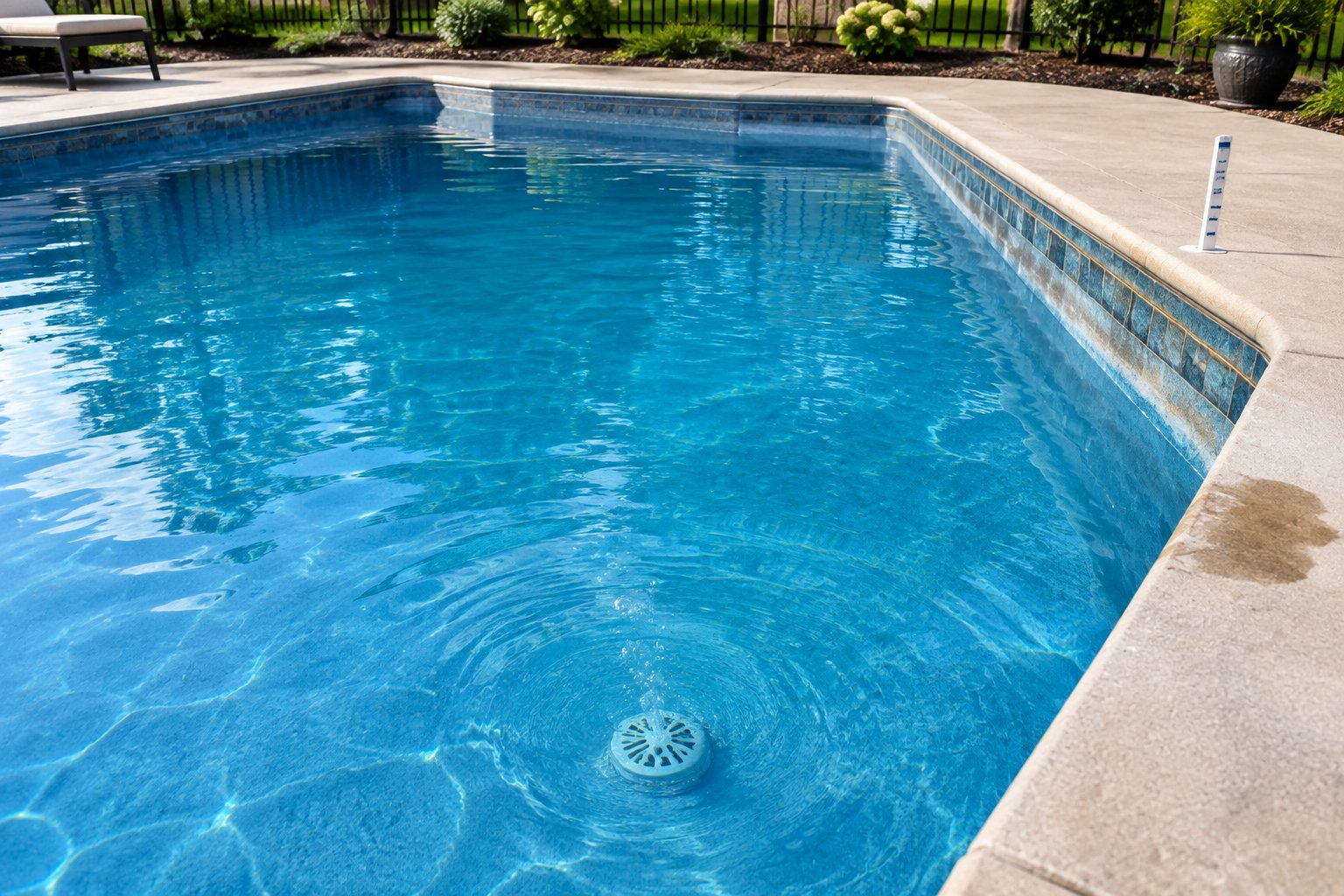
If your concrete pool keeps losing water and you cannot explain why, you may be watching the signs of a leaking pool main drain play out in real time. Owners across Marietta, Roswell, and Alpharetta deal with this every summer, when heat drives up evaporation and hides small leaks in plain sight.
Atlanta Leak Pros has spent more than 13 years working hands-on with pools across the metro area, tracing water loss back to its actual source instead of guessing. That in-house experience matters here because main drain leaks mimic other problems, from skimmer leaks to plumbing cracks under the deck.
In this guide, you will find the exact warning signs tied to a leaking main drain, how to test for it safely at home, and what separates a simple fix from a full pool structural repair.
Warning Signs That Point to the Main Drain
A leaking main drain rarely announces itself with an obvious puddle. Instead, it shows up as a pattern of small, easy-to-dismiss clues that add up over a week or two.
Water Loss That Exceeds Normal Evaporation
Losing more than a quarter to half an inch of water per day is a signal worth investigating, not ignoring. Atlanta summers push evaporation higher than cooler months, but a pool that drops an inch or more daily is behaving abnormally.
EPA WaterSense's residential pool guide puts a concrete number on that baseline: a pool losing more than 2 inches of water a week, or 3 inches in hot, dry stretches, likely has a leak rather than plain evaporation. Pools with covers, screens, or heavy tree coverage around Roswell and Johns Creek properties tend to lose less through evaporation alone.
If your daily loss is consistently higher than that threshold suggests, the main drain deserves a closer look.
Air Bubbles, Weak Suction, or Pump Cavitation
Air bubbles coming from your returns or a weakened pump suction often point straight to a drain-line problem. This happens when air enters the plumbing system through a crack or loose fitting near the drain, and the pump pulls it in along with water.
You might also notice the pump making a rattling or gurgling sound, a sign of cavitation caused by inconsistent suction. Classic signs include consistent water loss beyond normal evaporation, air bubbles in the pump basket, and reduced suction at the returns.
Cracks, Loose Fittings, or Shifting Material in the Deep End
Visible cracks near the drain cover or shifting plaster in the deep end usually mean the shell or fitting has already failed. Concrete pools built in the Atlanta area sit on clay-heavy soil that expands and contracts with rainfall, and that movement stresses the shell over years.
If you notice a loose drain cover, a chip in the surrounding plaster, or a hairline crack radiating outward, the underlying material has likely shifted. This kind of damage often calls for pool crack repair before the leak worsens.
Water Chemistry That Will Not Stay Balanced
Chemistry that will not hold steady, no matter how often you test and treat it, often means fresh groundwater is mixing into your pool through a leak. Groundwater carries different mineral content than tap water, which throws off your chlorine demand and pH readings.
If you are adding chemicals more frequently than usual and still fighting cloudy water, a leak at the main drain could be diluting your treatment efforts. That pattern, paired with unexplained water loss, is a strong enough reason to move from casual observation to an actual water-loss test.
How Water-Loss Patterns Help Locate the Leak
The way your pool loses water often reveals exactly where the problem lives before any equipment gets involved. Noticing when and how fast the level drops narrows the search significantly.
Does the Pool Lose More Water With the Pump Running?
Faster water loss with the pump on almost always points to the pressure side or suction lines near the main drain. When the pump runs, it creates pressure that pushes water out through any crack or failed seal in the plumbing.
A noticeable drop in water level when the pool pump is running, but not when it's off, points to a leak in the plumbing system near the main drain. Turn the pump off for 24 hours and compare the water loss to a day with the pump running normally.
This single comparison often tells you more than a week of guessing.
What It Means When the Water Stops at a Certain Level
Water that stops dropping at a specific line usually means the leak sits at or above that point, not below it. This is one of the most useful clues for narrowing down whether the issue is the main drain, a skimmer, or a return line higher up the wall.
If the water keeps falling until it reaches the bottom of the skimmer opening and then holds steady, the leak is likely in or above the skimmer, not the drain. If it keeps dropping past that point toward the floor, the main drain and its plumbing become the more likely suspects.
Wet Soil and Settling Between the Pool and Equipment Pad
Damp soil, sunken patches, or soft spots between the pool shell and the equipment pad usually mean a leak in the underground plumbing. Concrete pools route main drain lines beneath the deck to reach the pump, and a break anywhere along that path lets water escape into the surrounding soil.
- Wet or spongy grass near the equipment pad that never fully dries
- Small sinkholes or settling near the deck edge closest to the pool
- A musty smell near the equipment area even during dry weather
Classic signs of an underground drain line leak include wet spots in the yard between the pool and equipment pad. Once you notice ground-level clues like these, it's worth confirming the leak yourself before assuming the worst.
How to Confirm a Suspected Leak Safely
A simple bucket test gives you a reliable baseline before you assume anything about the plumbing. This test costs nothing and takes less than 24 hours to produce a useful comparison.
Run a Bucket Test Before Assuming a Plumbing Failure
Fill a bucket with pool water, set it on a step so it floats at the same level as the pool, and mark both water lines. Wait 24 hours, then compare how far each line dropped.
If the pool loses noticeably more water than the bucket, you have a real leak, not just evaporation. If the two lines drop about the same amount, evaporation is likely the cause, and you don't need further testing yet.
Inspect the Drain Cover and Visible Seams Without Diving Risks
A visual check of the drain cover and surrounding plaster can reveal obvious damage without requiring a dive or disturbing the fitting. Look for a cracked, warped, or loose drain cover, since Georgia safety codes require secure, code-compliant covers on every main drain.
Check the plaster or gunite immediately around the drain for discoloration, staining, or a slightly sunken appearance. Never remove or attempt to repair the drain cover yourself, since main drain suction can create serious entrapment risk.
When Dye Testing Can Help and When It Cannot
Dye testing works well for pinpointing a leak at the drain body itself but cannot detect a break further down an underground line. With the pump off and the water still, a small amount of dye released near the drain will get pulled toward any crack or gap in the fitting.
Finding a pool leak often requires underwater visual inspection of the drain pot, hydrostatic valve, and pipe connections, followed by dye testing to confirm the exact spot. If the dye test shows no reaction but water loss continues, the leak likely sits further along the underground pipe, which dye alone cannot reach.
That gap between what dye testing can confirm and what it cannot is exactly why professional pressure testing exists.
What Can Leak at the Bottom of an Inground Pool?
Several distinct failures can happen at the bottom of an inground pool, and each one requires a different repair approach. Knowing which type you are dealing with prevents paying for the wrong fix.
Failed Seals Around the Drain Body
The rubber gasket or seal where the drain meets the shell wears out over time, especially in older concrete pools built before 2010. Once that seal degrades, water seeps around the fitting even though the drain itself and the plumbing beyond it stay intact.
This type of leak is usually the least expensive to address because it doesn't require excavation. A technician can often reseal or replace the fitting during a single pool leak detection visit.
Cracked or Separated Underground Main Drain Lines
Underground pipes running from the main drain to the equipment pad can crack, separate at the joints, or shift due to soil movement. Atlanta's clay soil expands when saturated and contracts during dry spells, which puts steady stress on buried PVC over the years.
- Pipe joint separation from age or soil shifting
- Root intrusion cracking the pipe wall near mature trees common in Marietta and Roswell yards
- Full pipe fractures from ground settling near the equipment pad
These pipes can develop cracks, separations, or joint issues over time, leading to hidden leaks that are difficult to trace without specialized tools. Repairing this level of damage usually means underground pool plumbing repair, which involves locating the exact break point before any digging starts.
Damage to the Pool Shell, Plaster, or Fittings
Cracks in the gunite shell itself or chipped plaster around the drain opening let water seep directly through the pool floor. This differs from a plumbing leak because the water is passing through the structure, not the pipe.
Depending on severity, this kind of damage calls for pool crack repair on smaller shell cracks or full pool structural repair when the crack affects the pool's integrity. Pools older than 20 years with visible plaster wear are more likely to need concrete pool resurfacing alongside any structural work, since the surface and the shell tend to age together.
Deciding between a targeted patch and a larger structural fix depends entirely on what a proper inspection finds underneath the surface.
When to Call for Professional Leak Detection
Bring in a professional once your bucket test confirms a real leak and visual inspection does not reveal the cause. At that point, guessing costs more time and money than a proper diagnostic visit.
Why Pressure Testing Identifies Hidden Pipe Failures
Pressure testing isolates each pipe run and shows exactly where pressure drops off, pinpointing a break that dye testing alone cannot reach. This matters most when a dye test near the drain shows no clear result, but water loss continues, since that points to a suction-line leak dye alone cannot confirm.
This method works by sealing off sections of the plumbing and monitoring for pressure loss over time, which reveals cracks buried several feet underground. Electronic listening devices and pool leak detection equipment can narrow the location further before any excavation begins.
Why Main Drain Repairs Are Not a DIY Project
Main drain repairs involve suction strong enough to cause serious entrapment injury, which is why federal law and most states regulate drain covers and access. The U.S. Consumer Product Safety Commission's pool safety guidance treats drain entrapment as a serious hazard under the Virginia Graeme Baker Pool and Spa Safety Act, and warns against non-compliant or damaged drain covers.
Removing a drain cover or working near an active main drain line without properly shutting down the system puts you at real risk.
Suspected main drain leaks, extensive plumbing issues, or structural damage affecting the pool's integrity all call for professional help rather than a DIY attempt. Beyond safety, most homeowners don't have the equipment needed for accurate pressure testing.
What to Expect From a Repair Estimate
A proper estimate starts with a full inspection, including a bucket test review, visual check, dye test where applicable, and pressure testing of suspect lines. From there, the technician should explain exactly what failed and which repair category it falls under, whether that's a seal replacement, pool crack repair, underground pool plumbing repair, or full pool structural repair.
Costs vary widely depending on whether the fix requires excavation, shell work, or resurfacing alongside the repair. A clear estimate should separate diagnostic costs from repair costs so you know what you are paying for at each stage. That's exactly what a free, in-house estimate should give you before any work begins.
Protect Your Pool Before a Small Leak Grows
Catching a main drain leak early keeps a simple seal replacement from turning into a full structural repair. The cost difference can be significant, and the timeline can stretch from a single visit to several days of work.
Routine checks matter more in the Atlanta metro because of the region's shifting clay soil and heavy seasonal rainfall. After storms common in Alpharetta and Johns Creek, water tables rise and can push groundwater into an already weakened fitting or crack.
- Run a bucket test monthly during swim season to catch abnormal loss early
- Watch for soft or wet ground near the equipment pad after heavy rain
- Schedule a professional inspection any time chemistry will not stay balanced
Wrapping Up What Your Pool Is Telling You
Unexplained water loss, weak suction, and cracks near the deep end all point back to the same place: your main drain and the plumbing that feeds it. Catching these signs early means the difference between a quick seal repair and a much larger structural project down the road.
Every concrete pool in the Atlanta metro faces the same pressures from shifting soil, seasonal rain, and years of wear on aging plumbing. Whether you are watching the water level drop daily or staring at a hairline crack near the drain cover, a proper diagnostic visit gives you real answers instead of more guesswork.
Ready to stop guessing and start fixing? Atlanta Leak Pros will inspect your pool and give you a clear, honest estimate at no cost.
Frequently Asked Questions
How can I tell if my pool main drain is leaking?
Watch for water loss beyond normal evaporation, air bubbles at the returns, weak pump suction, and cracks near the deep end drain cover. A bucket test, compared with your pool's actual water loss over 24 hours, gives you the clearest first answer.
Why is my pool losing an inch of water a day?
An inch of daily loss is well beyond typical evaporation rates for most Atlanta-area pools, even during peak summer heat. This level of loss usually points to a leak in the plumbing, shell, or fittings, with the main drain as a common source.
Can a pool leak come from the bottom drain?
Yes, bottom-drain leaks can happen through a failed gasket seal, a cracked underground pipe, or damage to the surrounding shell and plaster. Each cause requires a different repair, from a simple reseal to full underground pool plumbing repair.
How do I know if my pool pipe is leaking underground?
Wet or spongy soil, small sinkholes near the equipment pad, and water that drops faster with the pump running are strong signs of an underground pipe leak. Pressure testing confirms the exact location before any digging starts.
How much does it cost to repair a pool main drain leak?
Costs depend on whether the fix is a seal replacement, a crack repair, or a full plumbing and structural repair involving excavation. A proper estimate breaks down the diagnostic work separately from the actual repair scope so you know exactly what you're paying for.
Should I run my pool pump if I suspect a main drain leak?
Running the pump briefly for testing purposes is fine, but avoid regular operation once you suspect a serious leak until it's diagnosed. Continued pump use can pull air into the system, worsen cavitation, and push more water through a failing seal or crack.
Free estimates on leak detection and repair across metro Atlanta. Mention the promotion for $25 off leak repairs.