
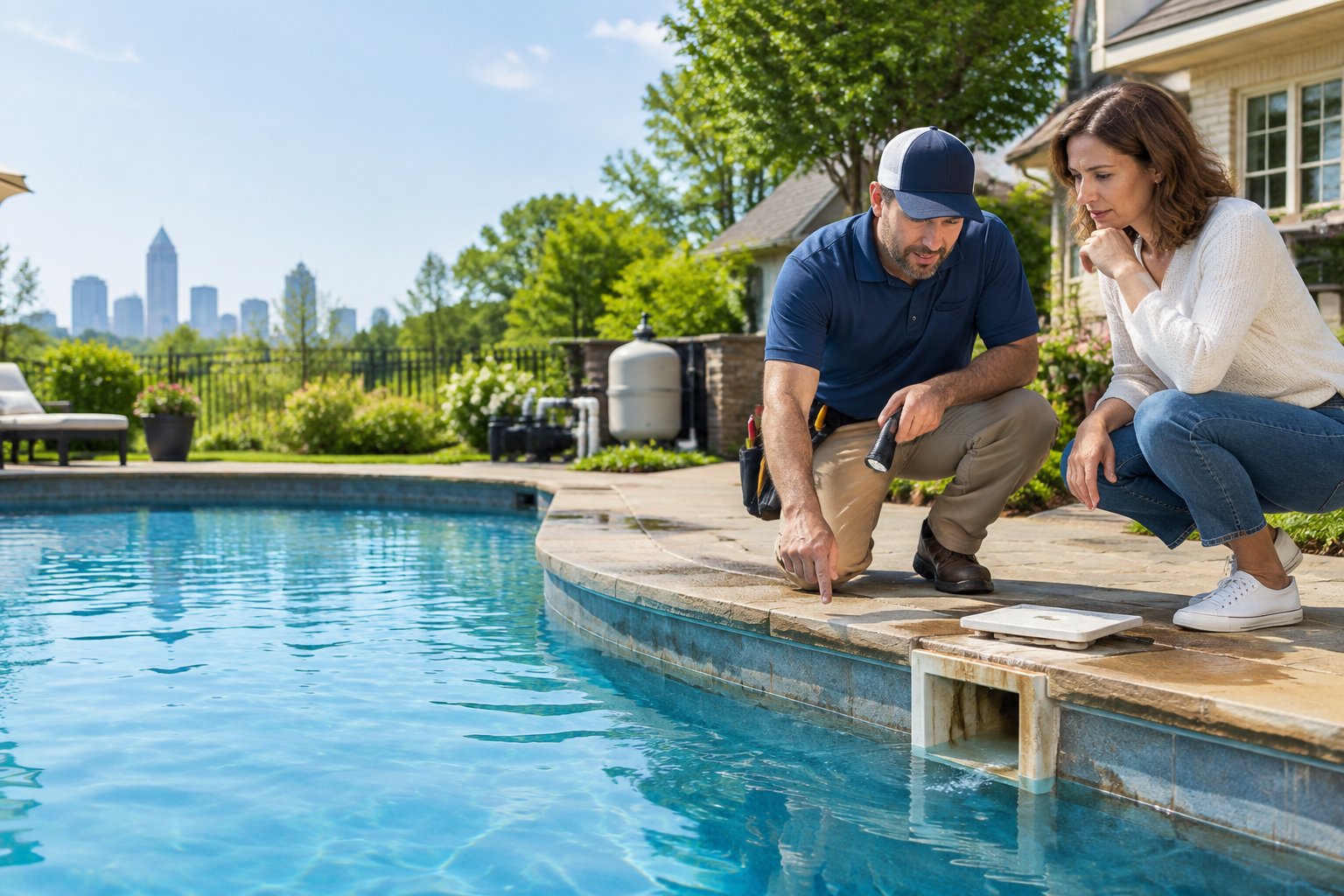
If your pool keeps losing water and you cannot explain why, pool skimmer leak symptoms are one of the first things worth checking. Concrete pools across the Atlanta metro deal with shifting clay soil, seasonal temperature swings, and years of expansion and contraction around the skimmer housing.
That combination makes the skimmer one of the most common places for a slow, hard-to-spot leak to start.
In this guide, you will find the exact signs that point to a skimmer leak, simple tests you can run yourself, and what separates a quick fix from a bigger structural repair. You will also see realistic cost ranges and the questions worth asking before you schedule a repair on your Roswell or Alpharetta pool.
The Warning Signs You Can See and Hear
A skimmer leak usually shows up as water loss, strange pump sounds, or changes in the ground near the pool wall. Catching these signs early keeps a small repair from turning into a bigger one.
Water That Stops Dropping Near the Skimmer Opening
Watch the waterline right at the skimmer mouth; a leak here often shows up as a faster drop than the rest of the pool. If you notice the water settling an inch or two below the skimmer opening and staying there, the skimmer throat or housing is a likely suspect.
This pattern differs from general evaporation, which lowers the whole pool evenly. A localized drop near one fixture points to a specific failure point rather than a pool-wide issue.
Air Bubbles in the Pump Basket or Return Jets
Air bubbles sputtering from the return jets usually mean the system is pulling air somewhere before the water reaches the pump. A cracked skimmer housing or a loose faceplate can let air into the suction line, and that air travels straight to the pump basket.
Pool owners in Marietta with older gunite pools often report this symptom, since decades of ground movement can loosen skimmer fittings over time. If the bubbles show up only when the pump first kicks on, the suction-side skimmer connection deserves a closer look.
Wet Soil, Deck Movement, or Musty Odors Near the Pool
Soft, soggy ground next to the skimmer is one of the clearest outdoor signs of a leak. Water escaping underground softens the soil, and over months that softened ground can shift the concrete deck or coping above it.
A musty smell near the equipment pad or deck edge often means water has been seeping into the ground for a while. Because different pool materials meet at the skimmer-to-shell joint, this spot is a known stress point where leaks develop over years of expansion and contraction.
- Standing water or unusually green grass near the skimmer pad
- Cracks forming in the deck within a few feet of the skimmer
- A hollow or spongy feel when walking on the deck near the pool wall
Poor Circulation, Cloudy Water, or a Pump That Loses Prime
A pump that keeps losing prime or water that stays cloudy despite normal chemical levels can trace back to a skimmer leak pulling air into the system. Poor circulation makes it harder for chlorine to reach every corner of the pool, which shows up as cloudiness or algae in the corners first.
If your pump needs constant re-priming, it is fighting an air leak somewhere in the suction line. That leads to the next question: is this really a leak, or is it just normal water loss from summer heat?
How to Tell Evaporation From a Real Water Loss Problem
A simple bucket test settles this in about 24 hours, and it costs nothing. Running it before assuming your skimmer is the problem saves you from chasing a leak that does not exist.
Use a Bucket Test Before Assuming the Skimmer Is at Fault
Place a bucket on the pool steps, fill it to match the pool's water level, and mark both levels with tape. After 24 hours, compare how far each level dropped. This do-it-yourself comparison is the same method the EPA's WaterSense program recommends for telling ordinary evaporation from a real leak, since an uncovered pool can lose thousands of gallons a year to evaporation alone even when nothing is wrong.
If the pool water drops noticeably more than the bucket water, something beyond evaporation is pulling water out. That gap is your signal to keep investigating rather than just topping off the water again.
Compare Water Loss With the Pump On and Off
Run the bucket test once with the pump running normally, then repeat it with the pump off for a full day. If the pool loses noticeably more water while the pump runs, that pattern usually points to a leak in the pressurized plumbing or fittings rather than the pool shell itself, a distinction our technicians rely on constantly when narrowing down where to look first.
This distinction matters for figuring out where to look next. A leak that only appears with the pump running often traces to the skimmer's suction line or a return jet, not the pool shell itself.
Track the Waterline Instead of Constantly Refilling the Pool
Mark the waterline with tape or a grease pencil and check it daily for a week instead of refilling on autopilot. Losing more than 2 inches of water a week, or 3 inches in hot, dry stretches with heavy evaporation, is the threshold the EPA's WaterSense pool guide points to as a strong signal of a real leak rather than normal water loss.
Keeping a simple log for a week gives you real numbers instead of guesses. Once you have confirmed the loss is more than evaporation, the next step is figuring out exactly where the water is escaping.
Where the Leak May Be Coming From
Skimmer leaks trace back to a handful of predictable failure points, and knowing which one you are dealing with changes the repair. Most cases fall into one of four categories.
Failed Faceplate Gaskets or Loose Screws
The faceplate gasket is a rubber seal behind the visible skimmer opening, and it hardens and cracks with age. Loose screws let the faceplate shift slightly, breaking the seal even if the gasket still looks intact.
This is often the least expensive fix, since replacing the gasket usually doesn't require draining the pool. It is also the first thing worth ruling out before assuming a bigger structural problem.
Cracks in the Skimmer Throat or Housing
The skimmer throat, where the plastic housing meets the concrete wall, takes on more stress than almost any other part of the pool. Different materials meeting at that joint expand and contract at different rates, and that mismatch eventually cracks the seal or the housing plastic itself.
Pool crack repair at this joint typically involves cutting out the deteriorated material and rebuilding the seal with a bonding compound rated for underwater use. On older plaster and gunite pools common throughout Johns Creek and Alpharetta, this joint is one of the most frequently repaired spots.
A Leak in the Skimmer Suction Line
Sometimes the skimmer itself is intact, but the pipe running from it to the pump has a crack or a separated joint underground. This kind of underground pool plumbing repair requires locating the exact point of failure before any digging starts, since guessing wrong means unnecessary excavation.
Professional pool leak detection uses pressure testing and listening equipment to pinpoint the failure without tearing up the whole yard. Water can escape behind the skimmer at the throat connection or through the underground plumbing itself, and a quick patch on the visible skimmer will not stop water loss if the real leak sits deeper in the line.
Settlement and Freeze-Thaw Stress Around the Pool Wall
Atlanta's clay soil expands and contracts with moisture changes, and that movement puts steady stress on the concrete around the skimmer. Over years, this settlement can crack the pool wall itself, not just the skimmer housing.
- Gasket or faceplate failure: usually the cheapest and fastest fix
- Throat or housing cracks: moderate repair involving pool crack repair techniques
- Suction line leaks: requires underground pool plumbing repair after detection
- Wall settlement: may call for pool structural repair if cracks extend into the shell
When settlement is severe enough to affect the pool wall, it can also affect nearby decking and coping. That overlap between skimmer symptoms and structural concerns is exactly why a proper inspection matters before repair work begins.
What You Can Check Safely Before Scheduling Repair
A few checks around the skimmer can narrow down the problem before you call anyone. None of these require draining the pool or touching plumbing.
Inspect the Faceplate, Gaskets, and Skimmer Body
Turn off the pump and look closely at the faceplate screws, the gasket edge, and the plastic skimmer body for hairline cracks. Run a finger along the gasket; if it feels brittle or crumbly instead of pliable, it has likely failed.
While you're at it, check the deck and coping within a few feet of the skimmer for new cracks or soft spots. These visual clues help you determine whether you are looking at a surface-level fix or something that runs deeper into the structure.
Use a Dye Test Around Suspected Openings
With the pump off and the water calm, squeeze a small amount of leak-detection dye near the skimmer throat and the faceplate edge. If the dye gets pulled into a crack or gap, you have found an active leak point.
This test works well for surface-level cracks but will not reveal leaks hidden behind the skimmer body or deep in the plumbing. It is a useful first step, not a complete diagnosis.
When a Pressure Test or Professional Detection Is Needed
If the dye test shows nothing but water loss continues, the leak is likely behind the skimmer structure or somewhere in the underground plumbing. At that point, professional pool leak detection using pressure testing and specialized listening equipment finds what a homeowner cannot see or reach.
This step matters because patching a visible crack while the real leak sits in the plumbing wastes money and leaves the water loss unresolved. Professional testing prevents that repeat-repair cycle by confirming the actual source before any work begins.
Repair Options and What Affects the Cost
Repair costs vary based on what's broken and how deep the fix needs to go. A gasket or faceplate replacement is the least invasive option, while a leak reaching the plumbing or pool shell costs more because it requires excavation or structural work.
- Faceplate and gasket replacement: minor repair, no draining required in most cases
- Pool crack repair at the skimmer throat: moderate cost, involves rebonding the joint
- Underground pool plumbing repair: cost depends on how far the pipe run extends and how deep it sits
- Pool structural repair: highest cost tier, needed when settlement cracks reach the pool wall
- Concrete pool resurfacing: sometimes recommended afterward if repairs disturbed a large surface area
A pool skimmer leak is best confirmed with a dye test, followed by professional pressure testing if the dye test alone doesn't reveal the source, since this combination catches both surface cracks and hidden plumbing leaks. Once you know which repair category you are in, waiting only adds risk to the deck and surrounding structure.
If you are seeing water loss and want a straight answer, schedule your leak detection with Atlanta Leak Pros.
Acting Early Protects Your Pool and Deck
Delaying a skimmer repair rarely saves money; it usually adds a second problem on top of the first. Water that keeps escaping into the ground softens soil, stresses the deck, and can eventually reach the pool's structural wall.
A small crack in the skimmer throat, left alone for a season, can widen enough to require full pool crack repair instead of a simple gasket swap. Homeowners in Alpharetta and Marietta with mature landscaping near their pools often see this play out as tree roots find their way toward the moisture, compounding the underground plumbing damage.
Deck and coping damage is one of the more expensive side effects of an ignored skimmer leak. Once soil erodes beneath a slab, the concrete can crack, settle unevenly, or separate from the pool wall entirely, turning a plumbing issue into a full structural repair.
- Weeks of ignored water loss: gasket or crack repair, low cost
- Months of ignored water loss: possible underground pool plumbing repair
- A year or more ignored: risk of pool structural repair and deck damage
- Any stage: concrete pool resurfacing may follow if the surface was disturbed during repair
Catching the leak early keeps the fix contained to the skimmer itself, which is the outcome every pool owner wants. The earlier you confirm what is happening, the less that escalation costs to fix down the line.
Frequently Asked Questions
How do I know if my pool skimmer is leaking?
Look for water loss that seems concentrated near the skimmer, air bubbles from the return jets, or wet soil around the skimmer pad. A bucket test run over 24 hours confirms whether the loss is more than normal evaporation.
Will a pool skimmer leak cause air bubbles in the pump?
Yes, a cracked skimmer housing or loose faceplate can pull air into the suction line, and that air shows up as bubbles in the pump basket or return jets. This usually happens right when the pump starts up.
Can I use pool putty to repair a leaking skimmer?
Pool putty can seal small surface cracks temporarily, but it does not fix leaks hidden behind the skimmer structure or in the underground plumbing. If the water loss returns after a putty repair, the real leak likely sits deeper and needs professional detection.
How much does it cost to fix a pool skimmer leak?
Cost depends on the failure point: gasket and faceplate replacement is the least expensive option, while underground pool plumbing repair or pool structural repair costs more because it requires excavation and rebuilding. A free estimate gives you an exact number based on your pool's specific damage.
Is an above-ground pool skimmer leak repaired differently?
Above-ground skimmer repairs usually focus on the gasket, faceplate, and housing since there is no concrete shell or underground plumbing involved. Concrete pools common across the Atlanta metro face additional factors like wall settlement and structural cracking that above-ground pools do not.
Should I keep running my pool pump if the skimmer is leaking?
Running the pump with a confirmed leak can pull more air into the system and further stress the equipment. It is safer to keep the pump running just enough to maintain circulation while you schedule a professional inspection to confirm the source.
Keeping Your Pool Watertight Through the Seasons
A skimmer leak rarely fixes itself, and the sooner you confirm what is happening, the fewer surprises you will face on your next water bill or deck inspection. Whether you are watching the waterline drop near Marietta, hearing air bubbles sputter from a return jet in Roswell, or noticing soft ground near your Alpharetta pool deck, the pattern usually points back to one of a handful of known failure points.
The bucket test, a visual inspection, and a dye test give you enough information to know whether you are dealing with a simple gasket or something reaching into the plumbing or shell. From there, the right repair, whether that is pool crack repair, underground pool plumbing repair, or a full pool structural repair, depends on how far the damage has spread.
Ready to stop guessing and start fixing? Atlanta Leak Pros will inspect your pool and give you a clear, honest estimate at no cost.
Free estimates on leak detection and repair across metro Atlanta. Mention the promotion for $25 off leak repairs.