
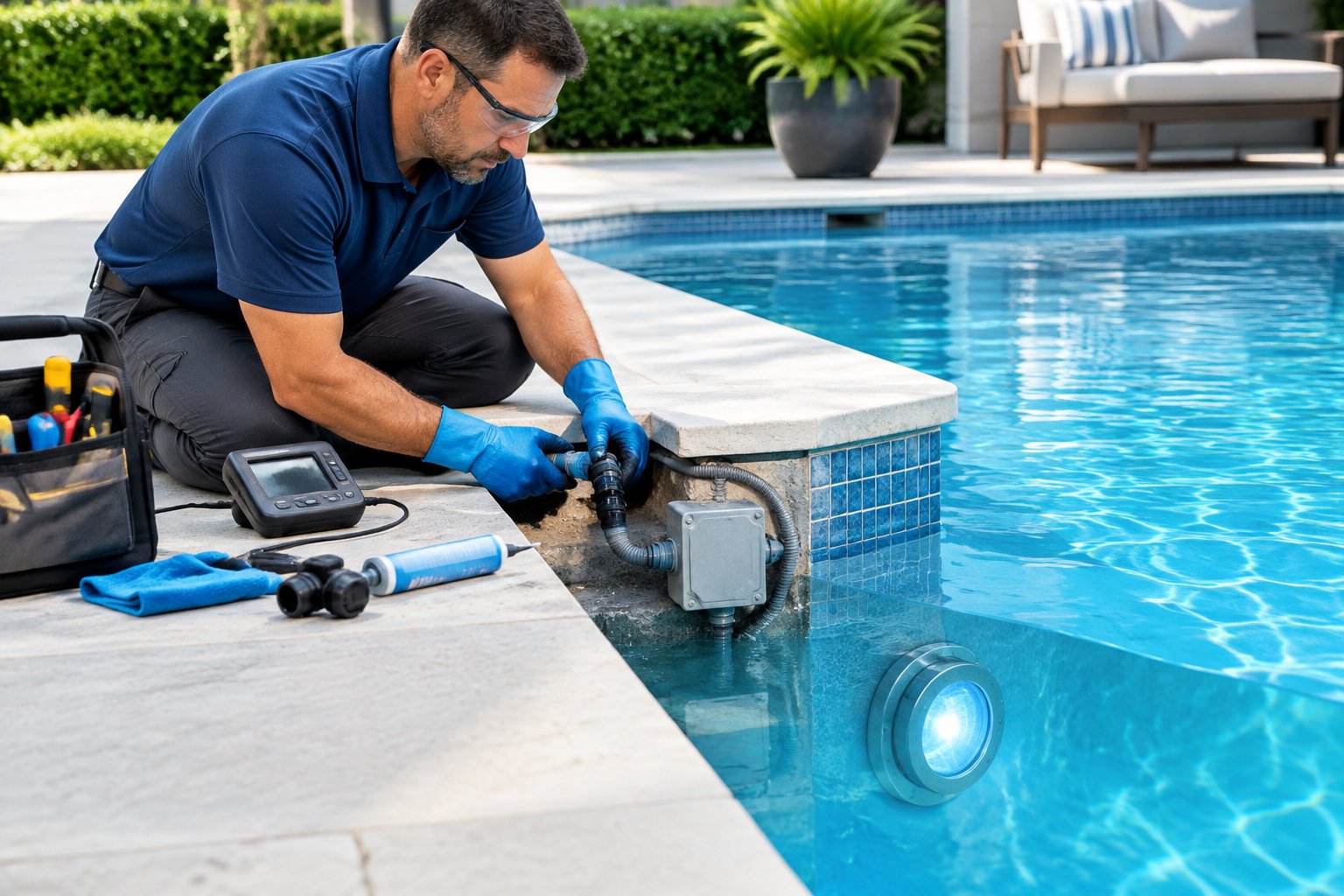
If your pool loses water and the light fixture area feels suspect, a pool light conduit leak repair may be the fix you need. Concrete pools around Marietta, Roswell, Alpharetta, and Johns Creek often develop this exact issue as the sealant around the light niche ages and pulls away from the conduit pipe.
Atlanta Leak Pros has spent more than 13 years working hands-on with concrete pools across the metro, tracing water loss back to light niches, cracked shells, and worn plumbing joints. That in-house experience means the difference between a quick gasket swap and a leak that needs real pool leak detection gets spotted fast, before a small seal failure turns into an electrical hazard or a bigger repair bill.
Keep reading to learn how to confirm a light conduit leak, what makes it electrically risky, which repairs actually stop the water, and what each option costs.
How to Confirm the Light Conduit Is Leaking
A pool light conduit leak usually shows up as water pulling toward the light niche during a simple dye test. That single clue separates this problem from evaporation or a leak somewhere else in the shell.
Signs Water Is Escaping Through the Light Niche
Watch for water loss that slows or stops when the pool light is off versus running. A cloudy ring of bubbles near the light lens after startup is another common tip-off.
You might also notice damp soil or a soft spot in the deck near the light fixture's junction box. Squirting leak detection dye near the light rim with the pump off and watching if color pulls into the niche is a reliable home test.
How to Rule Out Evaporation and Other Pool Leaks
Every Atlanta pool loses some water to evaporation, especially during hot, dry stretches in July and August. A bucket test, placing a filled bucket on the steps and comparing water drop over 24 hours, helps separate normal evaporation from an actual leak.
If the pool loses noticeably more water than the bucket, the leak points to a specific location rather than the weather. At that stage, professional pool leak detection narrows down whether the light conduit, a shell crack, or underground plumbing is the source.
Common Failure Points Behind the Pool Wall
Behind the light niche sits a conduit pipe that carries the light's electrical cord back to the junction box. Several spots along that path tend to fail first:
- The rubber gasket or O-ring sealing the light lens to the niche housing
- The point where the cord passes through the conduit opening
- Old caulk or putty originally used to seal the niche-to-conduit connection
- Cracks in the concrete surrounding the niche itself
A dye test that pulls color toward the back of the niche, where the cord enters the conduit, points to a conduit-specific leak rather than a niche seal problem. Once you know where the water is going, the next question is whether it's safe to touch anything near that fixture.
Make the Electrical System Safe Before Any Repair
Shut off power at the breaker and test with a voltage meter before touching the pool light, every single time. Pool lighting mixes electricity and standing water, which makes this the one step you cannot skip.
Why You Should Shut Off Power at the Breaker and GFCI
Pool light circuits run through a dedicated breaker and a GFCI (ground fault circuit interrupter) designed to cut power fast if it senses a fault. Flipping the breaker off and confirming the GFCI has tripped protects you while you inspect or pull the fixture.
Pool light fixtures are built with extra cord slack coiled inside the conduit, so the whole fixture can be lifted onto the deck for inspection without disconnecting wiring. Confirm the power is off with a non-contact voltage tester before you touch any part of the fixture or cord.
When Water in the Conduit Is Normal and When It Is a Problem
A small amount of condensation inside a light niche housing is common and not automatically a leak. Standing water that keeps refilling after you dry the niche, or water visibly seeping from the conduit opening, signals an active leak that needs attention.
The real warning sign is water reaching the electrical cord insulation or the wire nuts inside the junction box. That combination can degrade the cord over time and create a genuine shock hazard, not just a water loss problem.
When to Stop and Call a Licensed Pool Professional
Some situations call for a licensed electrician or pool professional instead of a homeowner fix. Stop and call for help if:
- The GFCI trips repeatedly and will not reset
- You see corrosion, melted insulation, or burn marks on the cord
- The light cord feels stuck or won't pull up from the conduit
- Water has reached the deck junction box, not just the niche
Once the power side is confirmed safe, the actual repair work on the conduit and niche can begin.
Repair Options That Stop Water Loss
Most pool light conduit leaks stop with one of four fixes, ranging from a low-cost gasket swap to a full conduit replacement. Which one applies depends on exactly where the water is getting in.
Replacing a Failed Light Lens Gasket
If the leak sits at the lens rim rather than deeper in the conduit, a new gasket is often the entire fix. Gasket kits typically run a modest amount, well under $30 in most cases.
The process involves shutting off power, pulling the fixture up on its cord, removing the old lens screws, and swapping the worn gasket for a new one rated for pool use. Reseat the lens evenly so it compresses the new gasket without pinching it.
Sealing the Conduit Opening With a Cord Stopper
When dye testing shows the leak coming from where the cord enters the conduit, a light cord stopper is a common fix. These rubber stoppers come in sizes to fit 3/4-inch or 1-inch conduit pipe, with a center hole that lets the cord pass through while sealing the opening.
You push the stopper firmly into place around the cord, and it blocks water from traveling further into the conduit. This fix works well for older concrete pools around Alpharetta where the original conduit sealant has simply worn away with age.
Repairing the Niche-to-Conduit Connection
If the leak is happening where the niche housing meets the conduit pipe itself, rather than at the cord opening, a marine-grade sealant or specialized adhesive is applied around that connection. This step often overlaps with broader pool crack repair when the surrounding concrete has hairline cracks feeding the leak.
For Johns Creek and Roswell pools built decades ago, this connection point is a common weak spot because original construction materials have simply aged past their service life.
When a Damaged Light Cord or Conduit Needs Replacement
A cord with cracked, brittle insulation or a conduit that has separated from the niche housing needs full replacement rather than a patch. This is also the point where underground pool plumbing repair or pool structural repair may enter the picture if the conduit damage connects to a larger shell issue.
A stuck or swollen cord that won't budge in the conduit is the clearest sign that a sealant fix alone won't hold, which raises the next obvious question: what does this actually cost to fix properly?
DIY Repair vs. Professional Leak Detection: What Will It Cost?
A gasket or cord stopper fix costs under $30 in parts, while a professional pool leak detection visit typically runs into the hundreds depending on complexity. Knowing which bracket your pool falls into starts with an honest look at the symptoms.
Typical Costs for Gaskets, Sealants, and Cord Stoppers
The materials side of this repair stays cheap. A replacement gasket runs a few dollars up to around $25, and a light cord stopper adds a similar amount. Marine-grade sealant for the niche connection runs in a similar low range.
Where costs climb is diagnosis, not parts. Based on the jobs Atlanta Leak Pros runs across the metro, a surface crack in a concrete pool shell costs meaningfully less to detect and repair than a deeper structural crack, since the deeper problem needs more testing and more extensive concrete work to fix correctly.
What Raises the Price of a Professional Repair
Several factors push a repair estimate higher once a technician gets involved:
- Pressure testing needed to isolate a leak in buried plumbing lines
- Multiple suspected leak points requiring separate dye tests
- Draining part or all of the pool to access the niche
- Concrete crack repair needed alongside the conduit fix
Most homeowners facing a general pool leak, not just a light conduit issue, spend several hundred to a few thousand dollars once detection and repair are combined, depending on where the leak is and how much access work it takes. Extensive structural or underground plumbing work can push well past that range in more severe cases.
Why a Stuck Light Cord Changes the Repair Plan
A cord that won't pull free from the conduit usually means corrosion, swelling, or a kink that has locked it in place. Forcing it risks snapping the cord underwater, which turns a small fix into a full fixture and conduit replacement.
That single detail, whether the cord moves freely or not, is often the deciding factor in whether a homeowner in Marietta or Roswell can finish this repair themselves.
Preventing Another Leak Around Your Pool Light
Checking the light niche gasket and conduit seal once a season catches most failures before they cause real water loss. A five-minute visual check costs nothing and saves a repair bill later.
Inspection Habits That Catch Seal Failures Early
Pull the light fixture up gently (with power off) during your spring opening and look for cracked gaskets or gritty buildup around the lens. Run a dye test near the niche rim once a year, especially if your pool has lost more than a half-inch of water weekly.
Keep an eye on the deck area directly above the light junction box for soft or discolored spots. That's often the first visible sign of water traveling up through the conduit.
How Atlanta Weather and Pool Chemistry Affect Components
Georgia's summer heat and heavy rain cycles put real stress on rubber gaskets and sealants. UV exposure on deck-side fittings and constant temperature swings between a hot afternoon and a cool evening speed up gasket wear in pools across Alpharetta and Johns Creek.
Chlorine and pH imbalance also break down rubber seals faster than most homeowners expect. Keeping water chemistry balanced protects more than plaster, it protects every gasket and O-ring in the system.
When to Inspect the Light During a Renovation
Any time a pool is scheduled for concrete pool resurfacing or plaster work, the light niche and conduit deserve a close look while the pool is already drained. It's the easiest window to replace a tired gasket or reseal a conduit connection without extra draining cost.
If a contractor is already doing pool crack repair nearby, folding in the light conduit check adds very little time to the job. That timing question naturally leads into what happens if the leak isn't caught before it spreads toward the wiring.
Stop the Leak Before It Reaches the Electrical System
The real deadline on a pool light conduit leak isn't the water loss, it's how close that water gets to the cord and junction box. Once moisture reaches exposed wiring, this stops being a maintenance job and becomes a safety issue.
A leak that's caught early, at the gasket or cord-stopper stage, is a same-day fix with parts costing well under $30. Left alone through a full swim season, that same leak can degrade the cord insulation, corrode the niche housing, and eventually trip the GFCI so often that the light becomes unusable.
For homeowners in Marietta, Roswell, Alpharetta, or Johns Creek watching water disappear near the light fixture, the smartest move is confirming the source before guessing at a fix. Getting a professional pool leak detection check now, rather than after the cord has already failed, keeps this a small repair instead of a full fixture and conduit replacement.
If you are seeing water loss and want a straight answer, schedule your leak detection with Atlanta Leak Pros.
Frequently Asked Questions
How do I fix a pool light conduit leak?
Most fixes involve replacing the lens gasket, sealing the conduit opening with a cord stopper, or applying marine-grade sealant at the niche connection. The right fix depends on exactly where the dye test shows water entering, so confirming the leak location comes before choosing a repair.
Is it normal to have water in the pool light conduit?
A small amount of condensation inside the niche housing is common and not always a sign of trouble. Standing water that keeps returning after drying, or water reaching the electrical cord, points to an active leak that needs repair.
How do I seal a pool light that leaks?
If the leak is at the lens, replace the rubber gasket, which runs a few dollars up to around $25. If it's at the cord opening, push a rubber cord stopper into place around the cord to block the conduit entry point.
Can I repair a pool light conduit leak without draining the pool?
Yes, in most cases. The gasket, cord stopper, and sealant repairs are done by lifting the fixture up on its cord slack, without draining the pool, as long as you can reach the niche safely.
My pool light wire is stuck in the conduit. What should I do?
Stop pulling and call a licensed pool professional rather than forcing it. A stuck cord usually means corrosion or swelling, and forcing it risks snapping the wire underwater and turning a small repair into a fixture replacement.
How much does pool light conduit leak repair cost?
Simple fixes like gaskets or cord stoppers cost under $30 in parts. Professional diagnosis and repair, especially if a shell crack or plumbing issue is involved, typically runs several hundred to a few thousand dollars, with more severe structural cases running higher.
Ready to stop guessing and start fixing? Atlanta Leak Pros will put eyes on your pool and give you a clear, honest estimate at no cost.
Free estimates on leak detection and repair across metro Atlanta. Mention the promotion for $25 off leak repairs.