
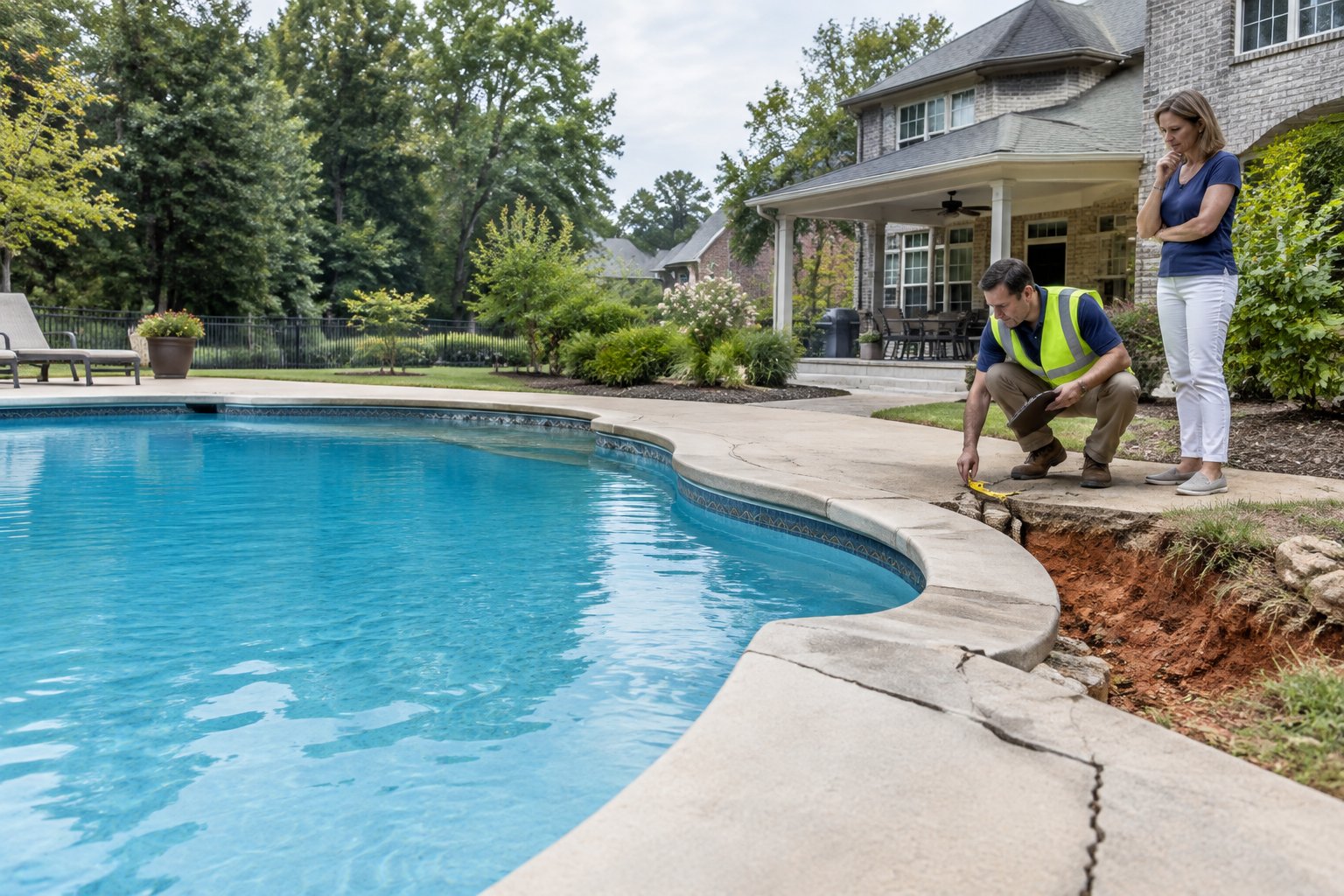
If your concrete pool has a new crack, a sinking corner of deck, or water that vanishes faster than it should, red clay soil may be the reason. Georgia red clay pool shifting is a common issue across the Atlanta metro because the ground under your backyard swells and shrinks with every wet season and dry spell. That movement puts steady pressure on the pool shell, the plumbing lines, and the deck around it.
Atlanta Leak Pros has spent more than 13 years working hands-on with pools built on this exact soil, from Marietta to Roswell to Alpharetta. That in-house experience means knowing the difference between a hairline crack from normal settling and a structural issue caused by shifting clay underneath the shell.
In this guide, you will find the specific soil mechanics behind pool shifting, the warning signs worth acting on, how professionals diagnose the cause, and real cost ranges for repairs. You will also learn how Johns Creek and Roswell homeowners can protect a pool from future soil movement.
Why Georgia Clay Moves and What It Does to a Pool
Georgia's red clay swells when it soaks up water and shrinks when it dries out, and that cycle pushes against everything buried in it. Pools sit in the middle of that movement because the shell, plumbing, and deck footings all touch the clay directly.
The Piedmont region, which covers most of metro Atlanta, sits on dense, iron-rich clay with a shrink-swell capacity far higher than sandy or loam soils found elsewhere in the state.
Expansions of ten percent or more in this kind of soil are not uncommon, and that volume change can exert enough force on a buried structure to cause real damage, a mechanism well documented in this explanation of expansive soil behavior. That same soil behavior applies to pool shells, not just house foundations.
How Wet-Dry Cycles Create Pressure Around the Pool Shell
Wet clay expands and presses against the pool wall from the outside. When it dries, it pulls away and leaves gaps that let the shell shift slightly out of position.
This repeated push-and-pull is what eventually cracks gunite and concrete surfaces over time. Pool surface cracks in North Georgia often trace back to this constant clay movement through the seasons.
Why Poor Drainage Makes Soil Movement Worse
Clay does not drain well, so water sits against the pool structure instead of moving away from it. That trapped water builds hydrostatic pressure, which pushes sideways against buried walls and pool shells.
Gutters that overflow near the pool, or a yard that slopes toward the equipment pad, feed this problem daily. Poor drainage makes soil swell more and pushes harder against buried structures, the same pattern seen in home foundations built on the same clay.
How Sloped Yards and Deck Loads Add Stress
Sloped lots common across Cobb and Fulton counties add extra stress because water runs downhill toward the pool instead of away from it. A concrete deck sitting on saturated clay can start to sag when the ground underneath loses the strength to support its weight.
Add a filled pool's own weight, sometimes topping 100,000 pounds for a standard size, and the ground beneath is under constant load. That combination of moisture, slope, and weight sets the stage for the visible damage covered next.
Signs the Problem May Be More Than Cosmetic
Not every crack means trouble, but certain patterns point straight to soil movement underneath the pool. Knowing which signs matter helps you decide whether to watch and wait or call for an inspection now.
Cracks That Signal Structural Movement
Diagonal cracks, cracks that widen over time, or cracks that run through both the shell and the deck usually point to shell movement rather than surface wear. These often appear near pool corners, steps, or where the shell meets the beam.
A single thin crack in plaster is common and rarely urgent. A crack you can fit a coin into, or one that keeps growing month over month, is a different story and usually needs pool crack repair before it worsens.
Deck Separation, Uneven Coping, and Settling
A gap opening between the deck and the coping is one of the clearest signs of soil movement under a Georgia pool. So is coping that tilts or a deck section that sits noticeably lower than the rest.
- Cracks wider than a pencil, especially ones that reappear after patching
- Coping stones that rock or have visible gaps underneath
- Deck sections sloping toward the pool instead of away
- Doors or gates near the pool area that no longer close evenly
- Tile lines that no longer sit level around the waterline
Recurring Leaks, Water Loss, and Plumbing Damage
Shifting soil can crack or separate underground pipe joints, leading to water loss that seems to come from nowhere. If your pool loses more than an inch of water a week beyond normal evaporation, plumbing damage is worth ruling out.
Underground pool plumbing repair becomes necessary when clay movement stresses pipe fittings buried below the shell. Left alone, a small leak can erode soil further and accelerate the very shifting that caused it.
When Surface Damage Is Normal Wear Instead
Small surface crazing across plaster, without any width or depth, is typically just age and chemistry, not soil movement. Most surface movement tied to Georgia clay is slow and cosmetic rather than an emergency.
The real test is whether damage is isolated or shows up in a pattern across the shell, deck, and plumbing together. That pattern is exactly what a proper diagnosis is built to find.
How a Pool Shifting Problem Is Diagnosed
A proper diagnosis starts with isolating whether water loss, cracking, or both are driving the visible damage. Guessing wastes money, since a crack repair does nothing for an underground leak, and vice versa.
Leak Detection and Plumbing Pressure Testing
Pool leak detection uses pressure testing on each plumbing line to find exactly where water is escaping underground. This step rules out or confirms a leak before any cosmetic work begins, since patching a crack over an active leak solves nothing.
Technicians pressurize the skimmer, main drain, and return lines separately to isolate the failing section. This targeted approach avoids the guesswork of digging up an entire yard to find one bad joint.
Evaluating the Shell, Beam, and Pool Deck
Once plumbing is cleared or flagged, the shell, bond beam, and deck get a visual and structural check. Inspectors look for crack patterns, deflection in the walls, and how the deck ties into the coping.
This is where the call gets made between simple pool crack repair and a deeper pool structural repair. A hairline surface crack calls for a different fix than a crack running through the bond beam into the shell itself.
Checking Grading, Runoff, and Groundwater Paths
The last piece looks at how water moves across the yard toward or away from the pool. Poor grading, clogged drains, or a downspout dumping water next to the equipment pad often explain why one side of a pool moved more than another.
- Slope of the yard relative to the pool shell
- Condition and placement of yard drains near the pool
- Downspout discharge points and distance from the pool structure
- Signs of standing water after rain near the deck or equipment pad
Fixing the water path matters as much as fixing the crack, since drainage is often the root cause behind repeated damage. That connection between cause and repair leads directly into what these fixes actually cost.
What Do Georgia Clay-Related Pool Repairs Cost?
Costs vary widely based on whether the issue is cosmetic, plumbing-related, or structural. Understanding the categories helps you compare a quote against what the work actually involves.
Minor Crack and Coping Repairs
Small pool crack repair jobs, like patching a hairline crack or resetting a section of coping, sit at the lower end of the cost scale. These jobs typically involve cleaning out the crack, applying a bonding agent, and refinishing the surface so it blends with the surrounding plaster or pebble finish.
Based on the jobs Atlanta Leak Pros runs across the metro, gunite cracks in areas with heavy clay movement tend to cost more to repair than similar damage in regions with more stable soil, largely because the underlying cause has to be addressed alongside the visible crack. Coping resets often get bundled with crack repair since both issues frequently share the same root cause.
Leak Repairs and Damaged Underground Plumbing
Underground pool plumbing repair costs depend heavily on how deep the pipe sits and how much decking has to come up to reach it. A single cracked fitting near the surface is a far smaller job than a broken line running under a large paver deck.
Pool leak detection is usually billed as its own service before any digging begins, since it tells the crew exactly where to dig instead of opening up the whole yard. This upfront step often saves money by avoiding unnecessary excavation.
Deck Leveling, Drainage Work, and Structural Renovation
Bigger jobs, like leveling a sunken deck section, regrading the yard, or full pool structural repair, sit at the top of the cost range. These projects usually involve some combination of concrete pool resurfacing, deck demolition and repour, and drainage correction around the pool's perimeter.
- Cosmetic crack and coping touch-ups: lower cost, shorter timeline
- Leak detection plus underground plumbing repair: moderate cost, depends on pipe depth
- Deck leveling and localized drainage correction: moderate to higher cost
- Full pool structural repair or shell rebuild: highest cost, longest timeline
A pool renovation project on Georgia clay soil can also carry hidden costs tied to grading and county permits that many initial quotes leave out.
What Determines Whether Repair or Replacement Makes Sense
The decision between repair and full renovation usually comes down to how deep the damage runs and how many systems are affected at once. A pool with one plumbing leak and a surface crack is a repair candidate.
A pool with structural cracking through the bond beam, chronic leaks, and a failing deck all at once may point toward full renovation instead. Whether a Georgia pool needs renovation or replacement often hinges on the extent of red-clay soil impact on the shell itself. That threshold is worth understanding before you invest in prevention work meant to avoid getting there again.
Call Atlanta Leak Pros today for a free estimate and find out exactly what your pool needs before the problem gets worse.
Protecting Your Pool From Future Soil Movement
Preventing future shifting comes down to controlling water before it reaches the clay around your pool. Most of these steps cost far less than the repairs they prevent.
Directing Roof and Yard Runoff Away From the Pool
Gutters and downspouts that empty near the pool equipment pad or deck feed clay expansion directly. Extending downspouts several feet away from the pool structure reduces the volume of water saturating that soil after every storm.
Regrading a section of yard so it slopes away from the pool, rather than toward it, addresses the same problem at a larger scale. This is often a smaller project than homeowners expect, especially compared to the cost of repeated pool crack repair.
Maintaining Deck Joints, Drainage, and Water Chemistry
Expansion joints between deck sections are designed to flex as soil moves, but they need to stay clear of debris and old caulk to do their job. Resealing these joints every few years keeps water from pooling and seeping into the clay underneath.
Yard drains near the pool should be checked seasonally, since a clogged drain sends water exactly where it should not go. Balanced pool water chemistry also protects the plaster surface, reducing the chance that surface wear turns into a bigger concrete pool resurfacing project sooner than needed.
When to Schedule an Inspection Before Damage Spreads
An annual check of the shell, deck, and drainage catches small issues while they are still small. Waiting until a crack is visible from across the yard usually means the repair bill has grown along with it.
- Schedule a drainage check each spring before heavy rain season
- Inspect expansion joints and coping each fall before winter freeze-thaw cycles
- Watch water level weekly for unexplained loss between refills
- Walk the deck perimeter after major storms for new gaps or dips
Catching movement early is what keeps a manageable repair from turning into a full pool structural repair years later.
A Prompt Assessment Can Protect Your Pool Investment
A pool that gets checked early stays a repair job, not a rebuild. Waiting on a crack or unexplained water loss almost always raises the final cost once clay movement has had more time to work against the shell.
Concrete pools across Marietta, Roswell, Alpharetta, and Johns Creek all sit on some version of this same red clay, so the risk is not isolated to one neighborhood. What changes from property to property is drainage, slope, and how the original pool was built into the ground.
A hands-on inspection looks at the shell, the plumbing, and the drainage together instead of treating each as a separate problem. That combined view is what separates a lasting fix from a patch that fails again in a year.
If you are seeing water loss and want a straight answer, schedule your leak detection with Atlanta Leak Pros.
Frequently Asked Questions
Can Georgia Red Clay Really Cause a Pool to Shift?
Yes, Georgia's red clay is an expansive soil that swells when wet and shrinks when dry, and that repeated cycle puts pressure on buried pool shells. Over years, this movement can crack plaster, shift decking, and stress underground plumbing joints.
How Can I Tell Whether a Pool Crack Is Structural?
A structural crack is usually wide, growing, or running through both the deck and the shell rather than staying isolated to one small area. A quick way to check is whether the crack has changed size over the past few months; if it has, it needs a professional look.
Does a Shifting Pool Always Have a Leak?
Not always. Shifting can cause cosmetic cracking and deck movement without any water loss, but it also raises the risk of a plumbing leak developing at a stressed joint.
How Much Does It Cost to Repair a Pool Crack in the Atlanta Area?
Cost depends on whether the crack is surface-level or runs into the bond beam, with minor patch jobs costing far less than repairs involving deck removal. A free estimate is the most accurate way to get a number specific to your pool's condition.
Can Drainage Repairs Stop My Pool Deck From Sinking?
Improving drainage around a pool reduces the moisture swings that cause clay to expand and contract under the deck. It will not reverse existing settling, but it lowers the chance of new sinking once the deck has been leveled or repaired.
Should I Repair or Replace an Older Pool With Recurring Cracks?
Repair usually makes sense if damage is limited to isolated cracks or a single plumbing leak. Replacement or full structural renovation becomes the more practical option once cracking is widespread and paired with chronic leaks or deck failure across the whole pool.
Ready to stop guessing and start fixing? Atlanta Leak Pros will put eyes on your pool and give you a clear, honest estimate at no cost.
Free estimates on leak detection and repair across metro Atlanta. Mention the promotion for $25 off leak repairs.